“No plan of operations extends with any certainty beyond the first contact with the main hostile force”
— Field Marshal Helmuth Karl Bernhard Graf von Moltke
In my first post, I share Gigster’s journey — from Gigster 1.0 serving startups to Gigster 2.0, focused on the enterprise. As it turns out, our company evolution also illuminates an important lens that we now use to measure and define business success for ourselves and our customers.
Democratize Access to Software
When Roger Dickey and I finished Y-Combinator in the summer of 2015, we set out on a grand quest to “write the world’s software”. We believed that while software is a powerful engine for generating massive economic leverage, the ability to harness its power lay in the hands of a fortunate few. Gigster was on a mission to make software the great equalizer and to democratize access to its power.
Services Include:
Business Impact Trumps Leveling the Playing Field
Naturally, our initial focus was to empower startups to disrupt large industries. Aligning with startups also energized us — we were a startup, after all.
As we delivered hundreds of startup projects, we realized that true success was not just shipping software that worked, but also software that achieved true business impact. We saw that if a startup lacked a realistic plan to scale, the best software couldn’t save it.
Shifting Focus from Startup to Enterprise
At the same time, large companies were becoming acutely aware of their own need to respond to digital disruptors like Amazon and Netflix. And they started coming to Gigster to inject “startup DNA” into their stalled digital transformation projects, having discovered that traditional system integrators were no better equipped to deliver truly innovative solutions than they were.
Gigster 1.0 to 2.0: A Shift Worth Making
Our customer shift from startups to enterprise was challenging, as we had to focus more attention on security, scalability and change management. Overcoming these challenges has paid off, as we have gone from having no enterprise projects in the early days to over 80% today in enterprise and mid-market customers in a broad set of industries.
Gigster’s focus on enterprise projects as of Q4 2018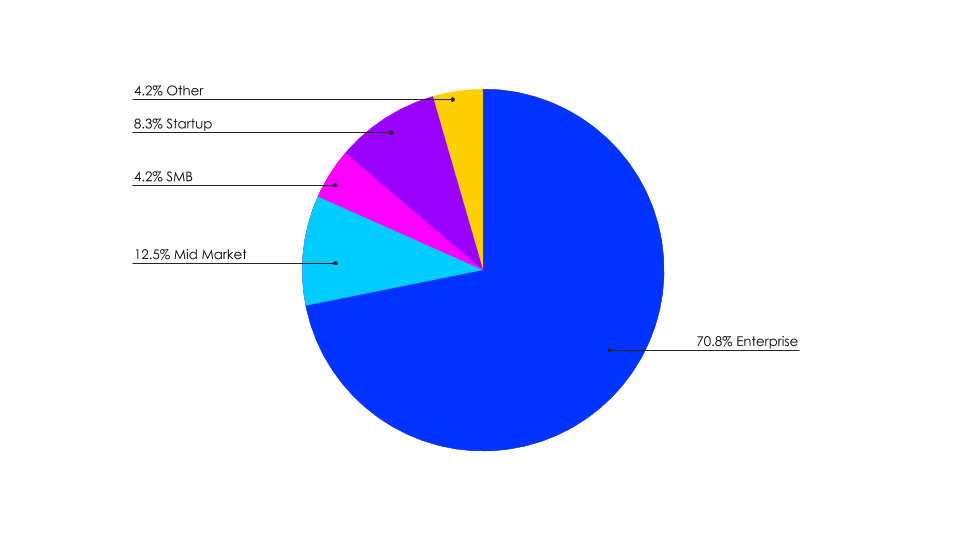
*Monthly snapshot showing the breadth of industries for Gigster customers*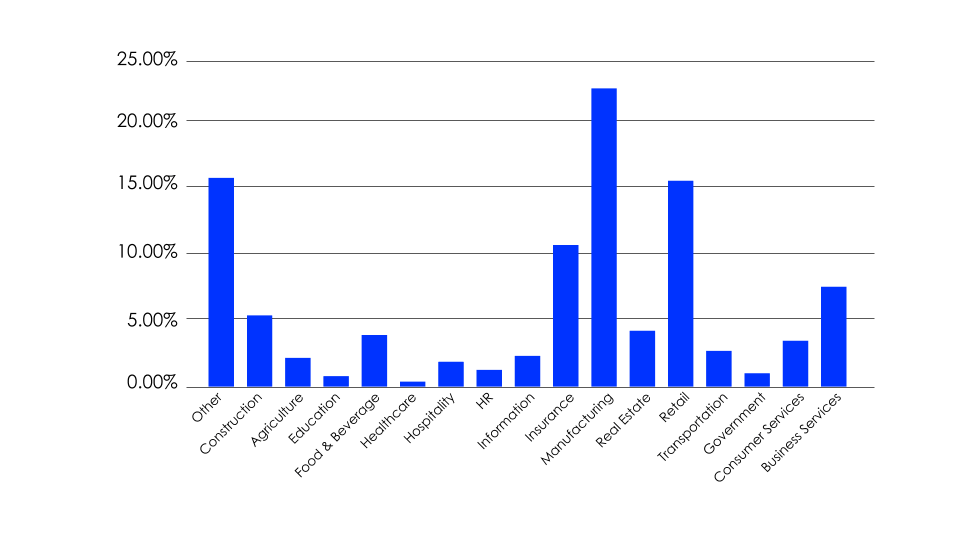
On the surface our story is one of a shift from working with startups to working with enterprises. A key underlying observation, however, involves the balance between investment and commitment to business change. While insufficient investment makes it difficult to derive much value from a software service, a company must also commit to radical business change for technology to help.
For Gigster, a key part of choosing to focus on business impact is developing the organizational muscle to drive crucial conversations and to set ourselves up structurally to facilitate the required culture shift inside of our enterprise partners.
If Gigster 1.0 was primarily about efficiency and scale, Gigster 2.0 is about re-engineering our entire stack – from our offerings to our processes and tools — and aiming it toward the priceless proposition of accelerating the successful delivery of business impact.